
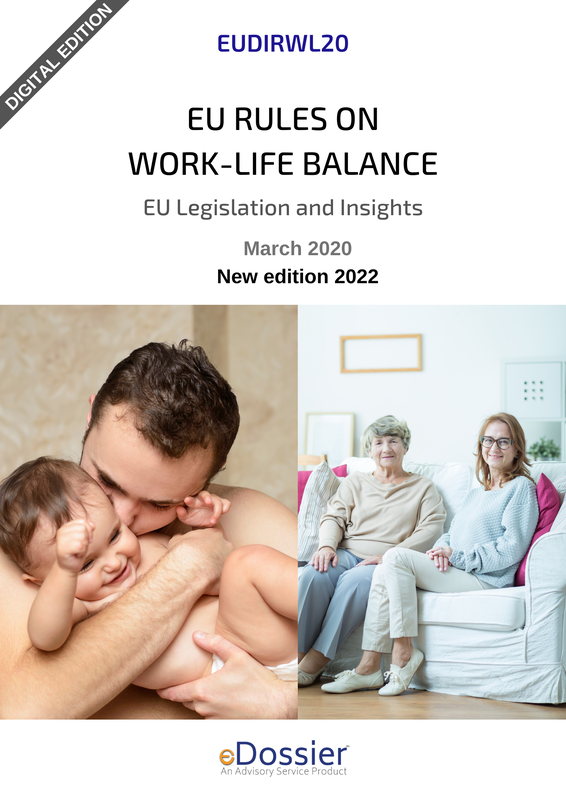
Read the Table of Content
|
eDossier EUDIRWL
EU RULES ON
|

Before purchasing an additional eEuropa product, please log in to your eEuropa account first, then return to this page to complete your purchase.
|
Summary
On 2nd August 2022, the EU Directive on work-life balance come into force. All Member States should to transpose it into national legislation.
This eDossier provides a comprehensive analysis of the European Union's legislative framework on work-life balance, focusing on the initiatives and regulations designed to support employees in balancing their professional and personal lives.
It examines the EU's commitment to promoting gender equality, enhancing social inclusion, and improving the well-being of workers across Member States.
The eDossier delves into the key aspects of the Work-Life Balance Directive, which aims to modernize existing EU laws and encourage a more equitable sharing of caring responsibilities between men and women. It outlines the new or higher minimum standards for parental, paternity, and carers' leave, and the rights to request flexible working arrangements for parents and carers.
Key elements include:
Additionally, the document examines the broader context of EU initiatives on social policy and employment, such as the European Pillar of Social Rights, which sets out key principles for fair working conditions and social protection. It analyzes how work-life balance policies contribute to economic growth, gender equality, and social cohesion within the EU.
The eDossier also addresses the implications of recent events, such as the COVID-19 pandemic, on work-life balance. It considers the accelerated shift towards remote working, the challenges faced by working parents and carers during lockdowns, and the lessons learned for future policy development.
By providing in-depth information on current legislation, policy initiatives, and ongoing debates, this eDossier equips employers, employees, policymakers, and stakeholders with the knowledge needed to navigate the evolving landscape of work-life balance in the EU.
It enables informed engagement with European institutions and contributes to shaping policies that support a healthier balance between professional and personal life for all citizens.
This eDossier provides a comprehensive analysis of the European Union's legislative framework on work-life balance, focusing on the initiatives and regulations designed to support employees in balancing their professional and personal lives.
It examines the EU's commitment to promoting gender equality, enhancing social inclusion, and improving the well-being of workers across Member States.
The eDossier delves into the key aspects of the Work-Life Balance Directive, which aims to modernize existing EU laws and encourage a more equitable sharing of caring responsibilities between men and women. It outlines the new or higher minimum standards for parental, paternity, and carers' leave, and the rights to request flexible working arrangements for parents and carers.
Key elements include:
- Paternity Leave: Fathers or equivalent second parents are entitled to at least 10 working days of paternity leave around the time of the birth of their child, compensated at least at the level of sick pay.
- Parental Leave: Each parent has an individual right to four months of parental leave, of which two months are non-transferable between parents and are paid at a level determined by Member States.
- Carers' Leave: Workers have the right to five working days per year of carers' leave to provide personal care or support to a relative or person living in the same household who needs significant care due to serious medical reasons.
- Flexible Working Arrangements: Parents of children up to at least eight years old and carers can request flexible working arrangements, including reduced working hours, flexible schedules, and remote working options.
Additionally, the document examines the broader context of EU initiatives on social policy and employment, such as the European Pillar of Social Rights, which sets out key principles for fair working conditions and social protection. It analyzes how work-life balance policies contribute to economic growth, gender equality, and social cohesion within the EU.
The eDossier also addresses the implications of recent events, such as the COVID-19 pandemic, on work-life balance. It considers the accelerated shift towards remote working, the challenges faced by working parents and carers during lockdowns, and the lessons learned for future policy development.
By providing in-depth information on current legislation, policy initiatives, and ongoing debates, this eDossier equips employers, employees, policymakers, and stakeholders with the knowledge needed to navigate the evolving landscape of work-life balance in the EU.
It enables informed engagement with European institutions and contributes to shaping policies that support a healthier balance between professional and personal life for all citizens.
* DaaS, Cloud-Based
This publication is offered as an eDossier DaaS, combining an updated digital document with 12-month cloud-based access. Subscribers can access both the web version and the PDF version online from computers, tablets or smartphones.
The document is not sold as a static file. It remains an updated eEuropa intelligence resource during the subscription period. Updates may include regulatory changes, new EU guidance, market developments and additional source links.
Access is provided for one year from subscription. Ownership of the document is not transferred; subscribers receive access rights to the updated eDossier according to the applicable licence terms.


